
Gravel Driveway Guide
Washouts aren't bad luck — they're a signal. The driveway isn't shedding water, and the water is taking the stone with it. Here's why it happens and what actually fixes it.
If your driveway is the lowest line on the property, water will follow it — and carry the gravel along. Stopping washouts means giving the water somewhere else to go.
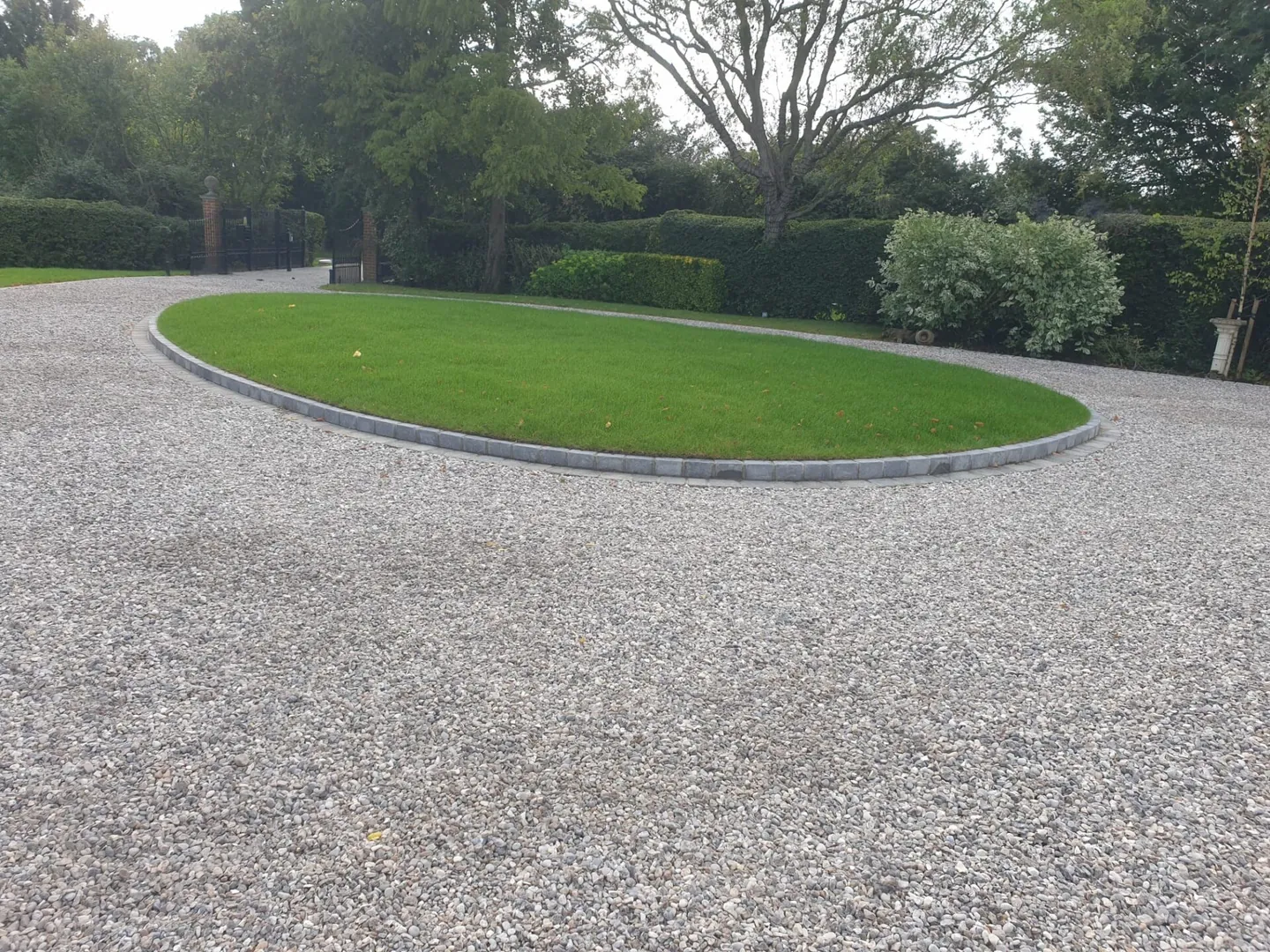
A flat driveway lets water run straight down the middle, cutting a channel as it goes. A proper crown — higher in the center — sheds water to the sides before it can pick up speed.
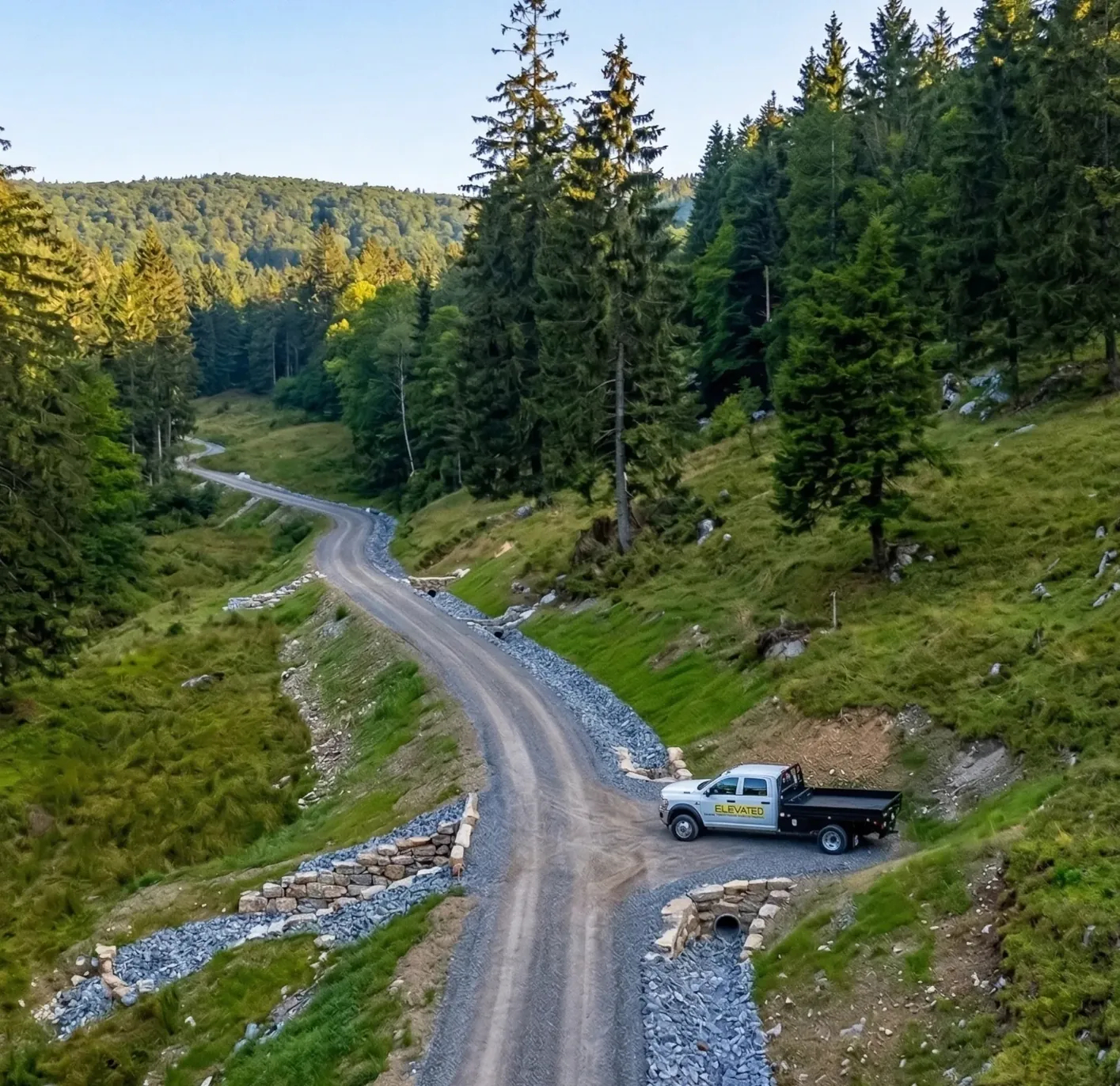
Gravel dumped on topsoil has nothing to hold it. Water gets under the stone, softens the ground, and the whole surface washes away. A compacted base is what keeps gravel in place.
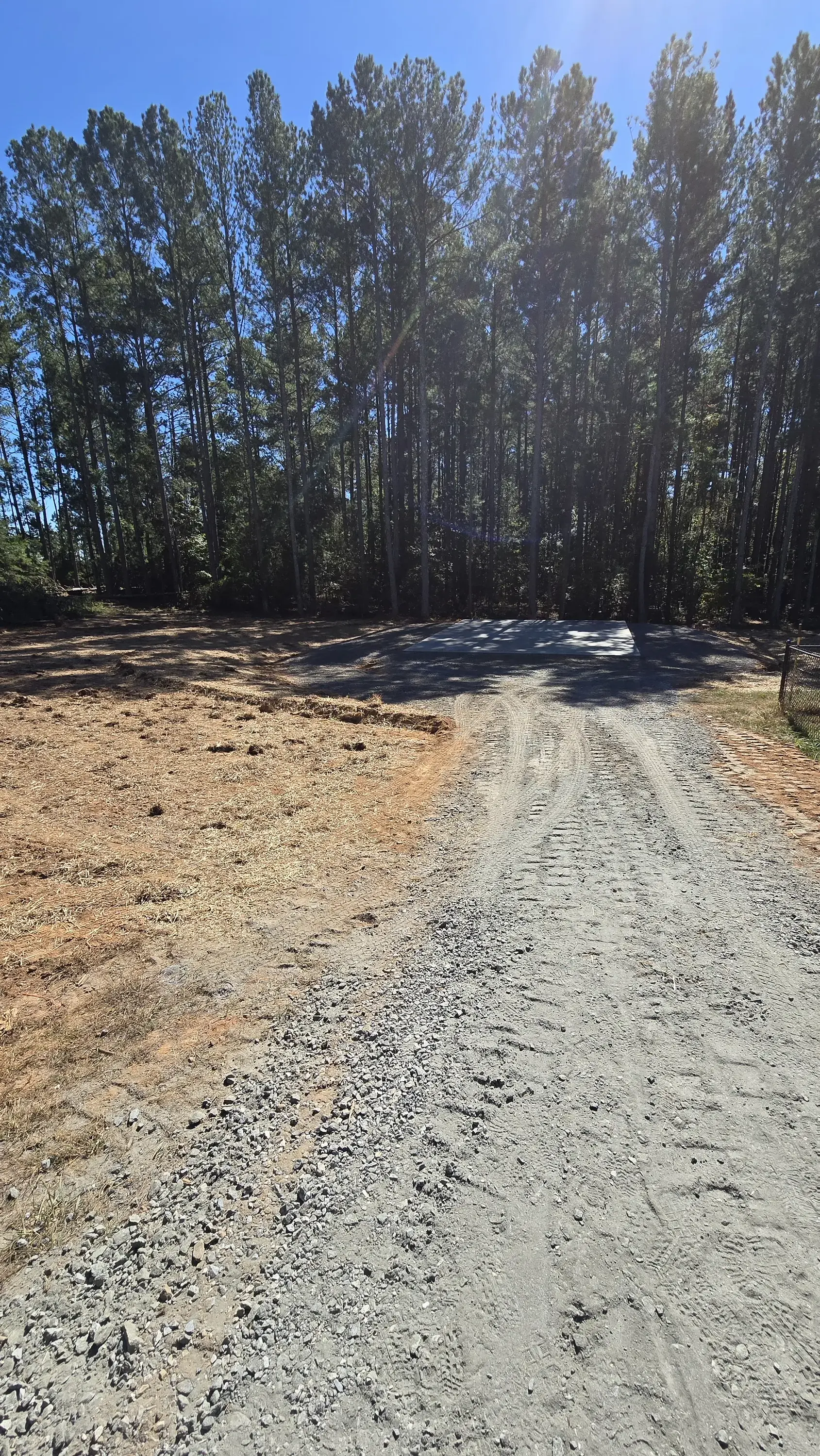
Where the drive crosses a ditch or low spot, water has to pass underneath. No culvert — or one too small — and the water backs up and runs over the drive, washing it out every storm.

Western NC drives face two hard truths: steep slopes and red clay that sheds water instead of soaking it in. Both concentrate runoff, which is why mountain driveways wash out faster than flat ones.
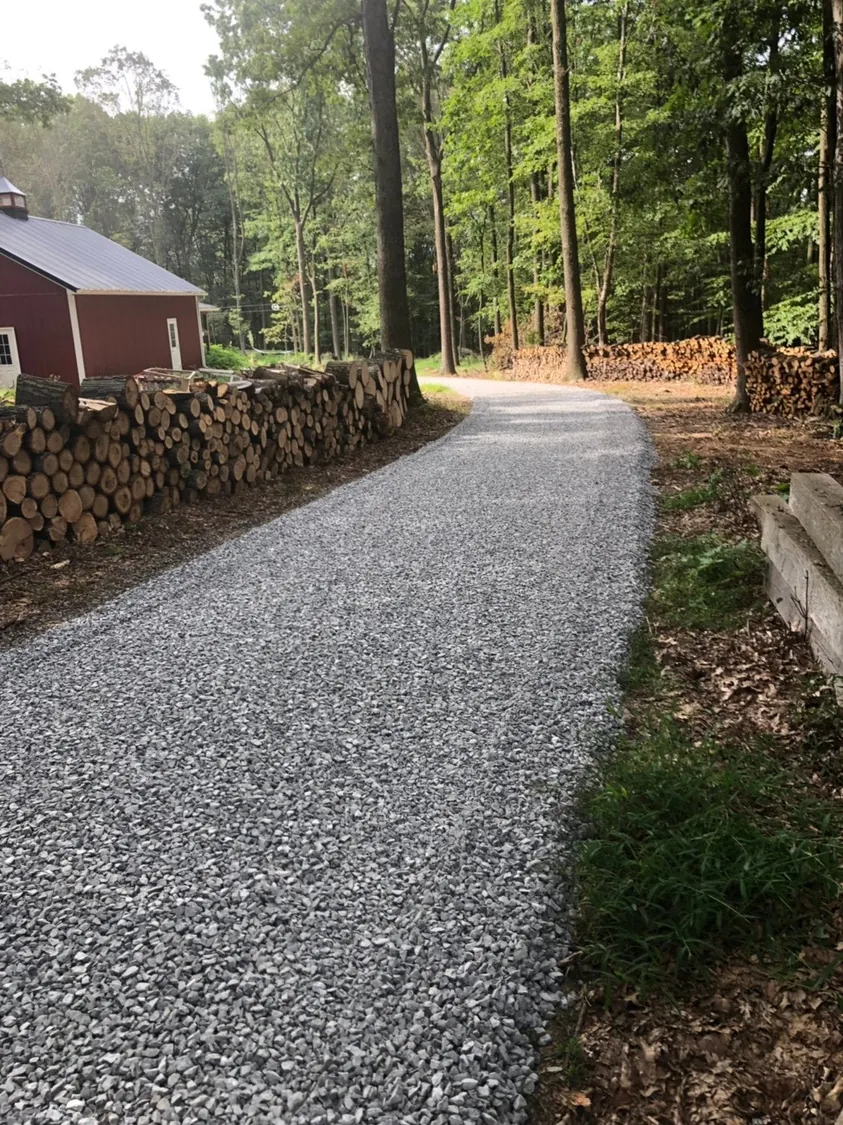
Washouts keep coming back until the underlying cause is fixed. The permanent fix is grade and drainage: a crown, a compacted base, side ditching, and the right culverts — done together.
Reach out — we'll review your project and walk you through the next step.